Legacy Project Homepage
Learn more about the LegacyCubed concept and the Legacy Project
Legacy Project
Spacer
Home
spacer
About the Legacy Project
Our Story
LegacyCubed
Awards and Reviews
Bosak's Blog
Get Involved
Advisory Board
Partners
Press Room
Contact
Spacer
spacer
Programs
spacer
Community Initiatives
spacer
Activities and Guides
spacer
Books and Products
spacer
Legacy Center
spacer
Sign up now for the Legacy Project e-Newsletter
For You
spacer
Educators
Youth
Parents
Grandparents/Elders
Program Leaders
Get Involved
Related
spacer

Find out more about educator, author, and Legacy Project Chair
Susan V. Bosak

Read a touching personal story – Ted's Legacy

Legacy Project Homepage
Spacer
Our Story
Legacy Project
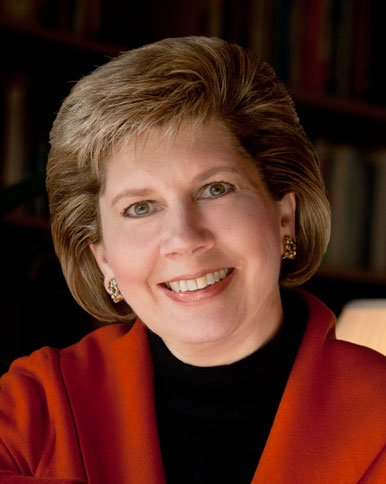
Legacy Project Chair Susan V. Bosak

Tick-tick tick-tick tick-tick… today is yesterday's tomorrow… tick-tick tick-tick tick-tick. As a big-picture learning and social innovation project, the Legacy Project has a big story. Legacy Project Chair Susan V. Bosak shares why what the Legacy Project does could transform your life and our world. Take a journey from the clock to the stars…


My father's old mantle clock sits in my office. My mother couldn't stand the ticking, so the clock was never used when I was little. Sometimes I don't hear the ticking at all. Sometimes, it's a steady reminder that every moment counts. And other times it's so loud that I'm tempted to pull out the hammer. That's when I neglect to wind it.

Tick-tick tick-tick tick-tickWhat time is it? Time to get up or get going? Time to be a parent, grandparent, great-grandparent? Time to get plugged into the newest technology before you get left behind the times? Or time to start a revolution?


The biggest question: how are you going to make your time on this planet matter? I can't help but laugh when I tell people I work with time, and they tell me they don't have time to think about time. Then what do you have time to think about?


Our Relationship with Time

Our relationship with time is complex, image © 2007 Sam Rohn

Our understanding and experience of time is a significant part of our personal development, as well as our relationships with others and with the world. It fundamentally influences how we think and act, individually and collectively. Tick-tick tick-tick tick-tick

Helping children understand time and their place in it is to teach them an important life lesson. They need to know how to tell time, how to be on time, how to manage time to get their homework done on time. So, they need a sense of daily time. They also need a sense of their LIFEtime. They need to think about the life ahead of them to make choices. As adults, life success has a lot to do with time; successful athletes, entrepreneurs, leaders, and others put in time to become successful. There's balancing the time we put into work with the time we share with the important people in our lives. As we get older, we become a model of time lived. We also tend to become more attuned to the natural rhythms of time as we move through sunrises to sunsets, springs to winters, and ultimately life to death. Then, there's eternal time, everything that comes before and after us.

Times are changing – rapidly. Just ask your grandmother or great-grandfather. Our world has changed more in the last hundred years than it did in the previous thousand. We split the atom, probed the psyche, invented plastic, perfected airplanes and rockets, put a television and then a computer in homes around the globe, filled billions of pockets with mobile phones, and reinvented ideas about everything from logic and language to economics and the environment. We've changed the way we interact, travel, communicate, learn, work, organize our communities, create and distribute resources, and affect our planet. Time is a central organizing feature in all of this and a part of all human activity. We've fundamentally changed our relationship with time.

The Legacy Project is a product of the times. It was born with the new millennium to explore the bigger picture – to grow a metaperspective through legacy to balance the pervasiveness of the McMoment.

Our smaller, everyday goal is to help people with time, in the context of their lifetime and the people and world around them.

Our bigger, long-term goal is to empower individuals, organizations, and communities to transform our fundamental relationship with time in a way that moves us toward a more meaningful, equitable, sustainable world.

This may all sound a little grand, but it started simply enough.


A Moment in Time: New Year's Eve, 2000

The Legacy Project is a grassroots, independent, nonideological, social project with a triple bottom line: financial, social, environmental. We are largely self-sustaining through sales of our books and other resources, and through workshops and learning experiences. We work with children, youth, adults, and elders across the continent and around the globe.

We have a core team of three: an educator, an engineer, and an economics grad. We'd been doing work for a number of years exploring consistent big-picture patterns in areas ranging from lifelong learning and generational demographics to community building and sustainable development. We're three very different thinkers. And so we have three very different perspectives on time: it's time for change; we have to manage time better; and time is money.

One thing we all agree on: you only have so much time. If you're lucky, you may have 30,000 or so days walking this planet.

Years of work in areas that may seem disconnected to some came together for me on New Year's Eve as we headed into 2000. I spent the holidays at our family home, a house my grandfather built, traveling through time.

My parents' health was declining and I was helping them pack to move closer to me. Home is where your story begins. There were parts of my life story, and their life story, everywhere in that home. A chin-up bar my grandfather had installed between the open floor joists in the basement ceiling. Dried wildflowers my mother had hung in the attic when she was still a teenager. Trees in the yard that my father had started from branches he broke off trees he liked and sprouted in buckets. The big stuffed white dog I slept with as a baby. My pencil scribbles as a toddler all over the inside of my bedroom closet door. Treasured yet tattered books read as bedtime stories. The fabric remnants of outfits my mother had sewn for me through the years. And in a box, on the top shelf of a closet, my father's old mantle clock.

Susan Bosak's family mantle clock

I pulled out the clock and wound it up. Tick-tick tick-tick tick-tick

It's exhausting packing up a lifetime. We'd been at it for days. It was New Year's Eve. There were still more boxes to sort through and tape up. The television was on in the background with a news special. Everyone was talking about time – reviewing the history of the last century, celebrating the moment, and sharing hopes and some fears about the future.

My parents went to bed before midnight. I waited for the countdown in Times Square. The cheers broke out.

When I turned off the television, the house was quiet – except for tick-tick tick-tick tick-tick

It didn't feel like a new millennium. I went to the floor-to-ceiling window at the front door I had stood at so often as a child. It was dark outside, very dark. It seemed like there was nothing and no one. Just a never-ending blackness.


Time Travel

World of Stars, image © Gwendolyn Koid

Slowly, in the blackness, little pinpricks of light became visible. I started to see the stars.

In that moment, tick-tick turned to twinkle-twinkle. The ancient Greeks had two words for time, chronos and kairos. The former refers to chronological or sequential time, while the latter refers to a fertile moment of indeterminate time in which something special happens. It's as if time both stands still and is endless. Going through so many intense personal memories and at the same time standing at the dawn of the new millennium, I listened to the ticking of the clock and looked up at the twinkling of the stars and I traveled through time.

In my mind, a seamless bigger story unfolded from my life to the generations of my family to the history and current challenges of the world to the infinity of time. In other words, tick-tick twinkle-twinkle.

My relationship with time changed. A decade of work and research came together in a metaperspective. I captured that metaperspective in a flurry of scribbles that were the seeds for what would become the multilayered LegacyCubed concept, a life tool and catalyst for social change.

Here's the basic idea: transform our understanding and experience of time by taking an ongoing big-picture approach, a metaperspective, using legacy as a portal concept. In other words, help people travel between the clock of your daily life and the stars of the big picture as you develop your personal potential to create your life, build relationships to connect with others, and change the world in which you live. Tick-tick twinkle-twinkle…


That's the short version of the story. Keep reading for the more detailed story. Either way, we invite you to grow a big idea with us.


Searching for the North Star

Finding the North Star

Stars are cool. Can you find the North Star in the photo? Hover over the photo to see the Big Dipper and the North Star.

I did a lot of research on stars, book learning and nighttime adventures, over eight years working on Science Is…. Do you know there are more stars in the universe than there are grains of sand on all the beaches in the world? The typical lifetime of a star is 10,000,000,000 years. The closest star to us is the sun, and it takes about 8.3 minutes for light to travel from the sun to Earth (the engineer reminds me of this – who remembers stuff like that?). Most stars in the galaxy are much farther away, and it can take tens of thousands of years for light from some stars in our galaxy to reach us. For stars that we can see in nearby galaxies, it can take millions of years. So, when you look up at the stars, you're actually looking back in time.

Stars are part of the present. From ancient times, we've used the sundial to determine the time of day by the position of the sun. Our sun's energy sustains life on Earth in the present. Exploding stars may have been the source of the first organic compounds that gave rise to life itself. So, we may have come from the stars; stars are key symbols in many religions.

You can also look to the future in the stars. When I was little, my mother taught me to make wishes on stars. She loved the stars in the night sky. We would stand together at the front door, the yard lit by moonlight, making wishes on stars. I dedicated my book Dream, an exploration through hopes and dreams across a lifetime told by a wise old star, to my mother. She has Alzheimer's now and doesn't remember that I dedicated the book to her. But she still loves the stars. She travels through time in a whole new way, and understanding her new relationship to time has informed my work in some very profound ways. My goal in writing Dream was, in fact, to share the LegacyCubed concept in so simple a way that even a child can understand it. Today's dream is tomorrow's legacy. In the circle of time, they become one in the same.

Past, present, and future in the stars. You can navigate by the stars, getting your bearings in this world and in eternity. This present is a continuously moving moment in the flow of past to future. There are rhythms and ripples and riptides of time through the universe. We need to understand and apply that every day, moving between the clock and the stars.


The McMoment

The McMoment

If we attend only to the clock, a clock that has in many ways been warped in the twenty-first century, we get stuck in the McMoment.

The McMoment is a uniquely modern phenomenon created by the ways in which we've changed our understanding and experience of the speed and span of time.

The ancient Babylonians, in a tradition later adopted by the Greeks and by medieval Christendom, followed the concept of the Great Year, generally used to refer to a 36,000-year cycle, after which history was thought to repeat itself. The ancients had an ability to recognize and operate within a bigger picture of time.

But as Maddy Harland, Founding Editor of acclaimed UK-based Permaculture Magazine points out, "We live in a world today that has lost the art of [understanding] time. The more 'developed' we become, the more harassed and 'time poor' our culture becomes. We have lost the long view, the understanding of sustainability over at least seven generations."

The modern world is complex and fast-paced. It's a 24/7 blur of successive short-timespan activities. We experience one narrow, superficial, artificially-conceived, disconnected McMoment after another.

We are struggling to live sustainably with our environment and peacefully with each other. We have too much information and not enough knowledge, let alone wisdom. Seven billion people, many of whom are living longer than ever before in history, are trying to find their way through a tangle of interconnected systems, each with its own demands and constraints. Natural systems, from the nervous system to the ecosystem to the solar system, are often opposed by human-constructed systems, the most dominant being the global economic system.

The imperative of the McMoment forces short-term thinking. On a societal level, it's not surprising that we can't solve the big problems like economic disparity and environmental degradation. On an individual level, research shows more people are feeling empty and alone despite more opportunities, material goods, and the world at our fingertips through the Internet.

The clock is necessary, and its ticking marks our lifespan. But I believe that if we hand over time completely to the clock, we give away our power. Our life, and our world, exists in the context of the stars.


A Bigger Story

We are the storytelling species. Narratives help us make sense of our lives and the world in which we live. Trapped by McMoments, we are preoccupied with little stories. Our solutions to a problem in one area are often confined to that area rather than connected to the bigger picture. And so our little stories fail to sustain us and effect real change.

American paleontologist, biologist, and science historian Stephen Jay Gould asked, "What are we missing in trying to read this world by the inappropriate scale of our small bodies and minuscule lifetimes?" To take on the personal and collective challenges of the twenty-first century, we need a bigger story that prompts bigger, better thinking.

A Bigger Story of Time

One interesting bigger story is Big History. It looks at long time frames with a multidisciplinary approach. It explores billions of years of time to uncover themes and patterns to better understand the cosmos, Earth, life and humanity in a unified way. Physics, chemistry, biology, ancient civilizations, and contemporary human history come together in an interrelated whole. ChronoZoom is a fascinating, star-studded visualization of Big History.

Another interesting bigger story is Long Now. Long Now hopes to provide a counterpoint to today's accelerating culture by providing a framework of the next 10,000 years. Pulitzer Prize-winning author Michael Chabon has written a thought-provoking article on Long Now. In it, he comments that "the story of the future was told to me, when I was growing up, not just by popular art and media but by public and domestic architecture, industrial design, school textbooks, theme parks, and by public institutions from museums to government agencies." Think Tomorrowland at Disneyland. He goes on to say:

I don't know what happened to the future. It's as if we lost our ability, or our will, to envision anything beyond the next hundred years or so, as if we lacked the fundamental faith that there will in fact be any future at all beyond that not-too-distant date… If you ask my eight-year-old about the future, he pretty much thinks the world is going to end, and that's it. Most likely global warming, he says – floods, storms, desertification – but the possibility of viral pandemic, meteor impact, or some kind of nuclear exchange is not alien to his view of the days to come. Maybe not tomorrow, or a year from now. The kid is more than capable of generating a full head of optimistic steam about next week, next vacation, his tenth birthday. It's only the world a hundred years on that leaves his hopes a blank. My son seems to take the end of everything, of all human endeavor and creation, for granted. He sees himself as living on the last page, if not in the last paragraph, of a long, strange and bewildering book.


This is both sad and alarming. Long Now has two fascinating projects. One is a mechanical 10,000 year clock. It "ticks once a year, bongs once a century, and the cuckoo comes out every millennium." They also have a library project which provides "content to go along with the long-term context provided by the clock."

Big History and Long Now are helpful in encouraging people to think bigger and longer. What needs to be added, though, for wide adoption and real personal and social change, is a deep psychosocial dimension. We need a way to speak to individuals and their life; we need to help people put their life into the bigger story without being overwhelmed by it.


A Metaperspective

I like the Greek word kosmos as it refers to the patterned whole of everything – physical, emotional, mental, and spiritual in the context of self, culture, and nature. Kosmos is a historic precursor to the LegacyCubed concept. LegacyCubed is a metaperspective, a psychosocial approach to a bigger story.

In an article about the 50th anniversary of the environmental movement, scientist and environmentalist David Suzuki writes:

Environmentalism has failed. Over the past 50 years, environmentalists have succeeded in raising awareness, changing logging practices, stopping mega-dams and offshore drilling, and reducing greenhouse gas emissions. But we were so focused on battling opponents and seeking public support that we failed to realize these battles reflect fundamentally different ways of seeing our place in the world. And it is our deep underlying worldview that determines the way we treat our surroundings. It's almost a cliché to refer to a "paradigm shift," but that is what we need to meet the challenge of the environmental crises our species has created.


Our deep underlying worldviews certainly affect the choices we make and the actions we take. But to address the challenges of the twenty-first century, it's about something more than a paradigm.

A paradigm is essentially a mental model – for example, shifting from a flat-Earth to round-Earth understanding of this planet. But a metaperspective, which is what I believe we need, is seeing the Earth not from itself but from the universe, from the stars.

Earthrise

Our planet has been around for billions of years. But one of the first photos of Earth, and the one that has become most iconic, was only taken in December, 1968 by the crew of Apollo 8. This mesmerizing photo has become known as Earthrise. You see the vivid blue-and-white image of the world rising in the dark vastness of space over a gray, barren lunar landscape. This was an image that would eventually launch a thousand environmental movements, such was its impact on the public consciousness.

The Pale Blue Dot

In 1990, Voyager 1 took another iconic photo known as The Pale Blue Dot. Earth appears as a "pale blue dot" surrounded by the vastness of space. Wrote American astronomer Carl Sagan in 1994:

Look again at that dot. That's here. That's home. That's us. On it everyone you love, everyone you know, everyone you ever heard of, every human being who ever was, lived out their lives. The aggregate of our joy and suffering, thousands of confident religions, ideologies, and economic doctrines, every hunter and forager, every hero and coward, every creator and destroyer of civilization, every king and peasant, every young couple in love, every mother and father, hopeful child, inventor and explorer, every teacher of morals, every corrupt politician, every 'superstar,' every 'supreme leader,' every saint and sinner in the history of our species lived there – on a mote of dust suspended in a sunbeam.


Now that's a metaperspective.

A metaperspective is a perspective rooted in a higher level that's more encompassing, inclusive and, ultimately, transformative.

Moving from the clock, tick-tick, to the stars, twinkle-twinkle, is a metaperspective. This is time travel accessible to all. But how can we apply that metaperspective in a real way every day?


Legacy

Stonehenge as an example of a legacy-based portal

We all have momentary glimpses of something bigger. It's not a transformation, but a starting point. You become more aware of new possibilities. But to effect real change at the individual and global levels, we need to travel time consistently in every choice we make. Every good time traveler knows you need a portal, a way in.

Legacy is a time travel portal. Legacy takes time and makes it personal. Your life multiplied by time equals legacy.

Legacy at its worst is a burden across time; at its best, it is a gift. I learned this from my grand- mother. I was very close to her from the time I was little. She lived nearby, so I saw her often. This rich intergenerational relationship introduced me to legacy. I was, in fact, lucky enough to have two grandmothers, a grandfather, a step-grandfather, and a great-grandfather. But I was particularly close to my maternal grandmother, who lived 102 years over three centuries. Every time I visited her, she would give me "a little something to remember her by" – something from her childhood, something she made, something she bought. Sometimes it was as simple as a Coffee Crisp chocolate bar – my favorite. She inspired my book A Little Something, an introduction to legacy through the heart. My grandmother would tell me that someday she wouldn't be here, but she could leave little parts of herself. She didn't have a lot of formal schooling, but she was wise. She connected to the bigger picture not in a way that was grim, but in a way that enriched her life and mine. Now that she's gone, I look at the keepsakes she gave me and I travel through time. I am connected to her not only through those keepsakes, but in who I have become.

Legacy is a rich concept that speaks to time both in terms of the individual and the collective. Legacy unites ego and altruism. It encapsulates the dichotomy between "If I'm not for myself, who will be?" and "If I'm only for myself, what am I?"

Any far-reaching social change has to speak to the ego. While it's true that when taken to extremes the ego becomes selfish, it's a necessary part of survival. In a plane emergency, you're told to put on your oxygen mask first before helping those around you. We all have this sense of self-importance, a need to feel like some part of ourselves is valuable enough to become immortal. But in pursuing that very need, we come to realize we can't do it alone. In order for some part of us to live on – our genes, creations, ideas, values, hopes – we have to instill it in the hearts and minds of others. We need others across generations. So me and we come together in a way that acknowledges the fundamental uncertainty of life and the immenseness of eternity. Legacy, particularly the multilayered LegacyCubed concept, can guide us from birth to death in a way that encourages new connections and offers deeper meaning – so that we can travel from tick-tick to twinkle-twinkle.

A metaperspective accessed through the portal of legacy prompts us to examine the past for relevant knowledge, experience, and precedent; explore the present context of any problem to be solved; and project into the future the long-range effects, particularly for successive generations. The LegacyCubed concept expands this basic premise as a life tool and catalyst for social change: your life in the context of the people and world around you, bringing together past, present, and future. Long-term, big-picture thinking is rare and difficult; LegacyCubed is a way to make that kind of thinking more commonplace and accessible.


Taking Action: Legacy Project

Climbing the Mountain of Life illustration © Shaun Tan from Dream by Susan V. Bosak

I hear the ticking of the clock.

Renowned Canadian physician, scientist, and early childhood education advocate Fraser Mustard was known for frequently asking, "Why is there such a gap between what we know and what we do?" As someone with scientific training, it was a source of much frustration to him, whether it was a failure to invest in young children, tap into the resources of elders, create an innovative economy, or tackle sustainable development.

The three of us – educator, engineer, and economics grad – have little interest in ideas that achieve accolades and no action. There's a reason that my book Dream culminates in the troika of Believe, Do, Think – in that order, based on social science research. Particularly in the modern world, sometimes taking that first step of action is more important than having every last detail analyzed. Too many reports sit on shelves, too many good intentions end in themselves. That doesn't mean we should take thoughtless action; it means we need to move back and forth between thought and action after we take that all-important first step.

We've spent many years evaluating ways to practically operationalize the LegacyCubed concept for children, youth, adults, and elders. Our approach is to break it into three interrelated levels, each responding to current realities in a holistic way. Each level supports and influences the others, with results reinforcing other results toward a tipping point.

We're already seeing a widening understanding of the base concept of legacy, especially as Boomers head into their third age. As they come closer to the end of their lifetime, Boomers are increasingly interested in the timeless over the transient, and fundamental quality of life issues – both for themselves and in terms of the world they want to leave their children and grandchildren. We divide up our communities by age – young people in schools, older people in retirement communities. But young and old together complete the circle of life. Together they can exist in a moment of time that's the grand sum of past, present, and future. Generations connect us to time in a way that goes beyond the clock. It's the experience of life in a multigenerational, interdependent, richly complex community that, more than anything else, teaches us how to be human. Properly focused, Boomers could help push the legacy concept to the tipping point for all ages.

Drawing on the ancient Greek word kosmos, the Legacy Project's three interrelated banner programs reflect self, culture, and nature. They are the three levels at which you evolve your legacy through your lifetime: personal, interpersonal, and community/world.

LifeDreams explores personal development and creating your life. Across Generations explores our connections with others, and encourages closer relationships between generations. Our World explores how each of us can help change the world to address issues like building stronger communities and caring for the environment. In other words, your life in the context of the people and world around you. Create, connect, change.

The programs are informed by research in the social and natural sciences, including human communication, literacy, life course, human development, aging, intergenerational relationships, family, conflict resolution, community building, economics, engineering, systems design, environmental science and renewable energy. Under a metaperspective, the vital dynamic is making the connections between these seemingly disconnected areas.

The Legacy Project's work responds directly to current realities:

LifeDreams Program

LifeDreams: Life expectancy in North America has increased from 47 years for those born in 1900 to 78 years for those born in 2007. Added years equal added potential, and added impetus to find meaning across the life course. But the education system is struggling to reinvent itself in light of the demands of the twenty-first century. Further, in a world of rapid change and significant challenge, lifelong learning is more important for fostering productive, engaged citizens and for countries to remain competitive in the global economy. Depending on region, 25% or more of high school students – and 40% of minorities – don't graduate on time. Even for those who complete high school and university, little guidance is provided for planning for the entire life course and creating a life path. 50% of current college grads are jobless or underemployed. 66% of grads say making a difference through their work is a priority; 45% of grads say they would take a lower level of pay to do so. As high as 70% of all generations – from Millennials to Boomers – agree that, rather than leaving it to others, they have a personal responsibility to make things better for society.


Across Generations Program

Across Generations: By 2030, 1 in 5 Americans (and 1 in 4 Canadians) will be over 65 years of age. Worldwide, for the first time in history, and probably for the rest of human history, people age 65 and older will outnumber children under age five. In the US, the population 65 years and older is largely white, while nearly 50% of recent births are minorities. The demographic shift creates the potential for rich intergenerational and cultural connections across seven or more generations: your own generation, three generations before you – parents, grandparents, great-grandparents – and three generations after you – children, grandchildren, and great-grandchildren. Research shows children need 4-6 involved, mature adults to fully develop emotionally and socially; unfortunately, children today get too much peer socialization. At the other end of the age spectrum, 70% of all 65 year-olds will need some long-term care before they die; 8 out of 10 will get it at home, not in a nursing home. Most care is provided by family members who are often unprepared and untrained for what is rewarding yet challenging work. There is considerable evidence that links community engagement to longevity, physical and mental health, life satisfaction, and other indicators of psychological well-being of older adults. Boomers currently have the highest volunteer rate of any age group. Harnessing the skills of Boomers, who are generally healthier and have higher levels of education than past elders, can be a tremendous resource for addressing numerous social challenges.


Our World Program

Our World: The world population in the early 1800s was 1 billion people. 120 years later, in the 1920s, it was 2 billion people. By 1960, 40 years later, it was about 3 billion people. Today, 50 years later, we're at 7 billion people and growing. Population growth places increasing demands on the ecosystem as well as a global economic system that's already under stress. Even as technology makes the world smaller, people feel less connected to each other and to nature. The lack of a sense of real cooperative, supportive community may be one of the most pressing social problems of the new millennium. And the environment may be the quintessential legacy issue, speaking to all generations. Greenhouse gases trap heat from the sun and warm the Earth's surface; levels of several key greenhouse gases have increased by about 40% since large-scale industrialization began around 150 years ago. Reducing our dependence on fossil fuels is critical. Trees also help ease global warming by taking in carbon dioxide and giving off oxygen. Trees cover approximately 30% of Earth's total land area, are home to 80% of our terrestrial biodiversity, and are the largest of living things – some species grow over 300 feet tall and may weigh 600 tons. In the last 20 years, we've lost 6 million hectares of primary forests; a purposeful chainsaw can, in minutes, bring down a tree that has grown for over 1,000 years. Increasing tree canopies is an important step toward global renewal.


These realities are inextricably interrelated when you look at them through the lens of time. A LegacyCubed metaperspective enables us to take action on all these realities in ways that effectively multiply to reach a tipping point.


The Legacy Center

When you're centered, you're in balance. The great trick in life, personally and collectively, is achieving balance. To quote the incomparable Dr. Seuss:

You'll get mixed up, of course,
as you already know.
You'll get mixed up
with many strange birds as you go.
So be sure when you step.
Step with care and great tact
and remember that Life's
a Great Balancing Act.
Just never forget to be dexterous and deft.
And never mix up your right foot with your left.


There's wisdom to be found in so-called children's books, which is why I write them and use them so often in my work. They're an equalizer across age.

And speaking of "strange birds," when I'm asked what I do, I like to joke that I help people go from tick-tick (the clock) to twinkle-twinkle (the stars) with some tweet-tweet in between (referring to nature, which was tweeting long before Twitter came along).

Father Time and Mother Earth are natural companions

Father Time and Mother Earth are natural companions (hover over the Pinecone macro photo). In traveling from the clock to the stars, nature is like a refueling station between the two, a place to get centered. In natural rhythms, you can see the clock. In the tranquility and simple miracles of nature, you can feel the stars. So, the physical and conceptual center of the Legacy Project is the Legacy Center on a 15-acre arboretum.

I learned something very interesting from a prominent ecologist as we walked the Legacy Center arboretum together. Where do you think it's best to plant a young tree: a clearing in an old-growth forest or an open field? Apparently, the young tree grows better when it's planted in an area with older trees. The reason, it seems, is that the roots of the young tree are able to follow the pathways created by former trees and implant themselves more deeply. Over time, the roots of many trees may actually graft themselves to one another, creating an intricate, interdependent foundation hidden under the ground. In this way, stronger trees share resources with weaker ones so that the whole forest becomes healthier. That's legacy: an interconnection across time, with a need for those who have come before us and a responsibility to those who come after us.


Grow a Big Idea

Legacy to the power of three… Create, Connect, Change as you Grow a Big Idea

Said Abraham Lincoln, "I want it said of me by those who knew me best, that I always plucked a thistle and planted a flower where I thought a flower would grow."

Grow a big idea with us. The way to grow is to learn. The Legacy Project is ultimately a learning project or, as I like to call it, a re-learning project. We need to re-learn our relationship with time so that we, and it, can grow.

The human mind is a meaning-making entity and it craves learning. In the human mind lies the hope for the human species. The answers aren't out there; the answers are in your head.

The Legacy Project enhances the learning children and teens experience in school, and offers lifelong learning opportunities for adults and elders. Learning is the means through which we fulfill our greatest potential and leave a meaningful legacy for generations to come. Lifelong learning that explores the bigger picture will foster more real solutions, inventions, discoveries – and more hope.

Our understanding and experience of time is a significant part of our personal development, as well as our relationships with others and with the world. Time underlies lives and global issues. Through a LegacyCubed metaperspective, you can learn a new way to understand and experience time to transform your life and our world. You can grow time into Time.

So, use legacy as your Time travel portal. Learn how to travel between the clock and the stars, getting your bearings in a bigger picture as you develop your personal potential to create your life, build relationships to connect meaningfully with others, and change the world we all share and will pass on to future generations.

One of the lessons of Time past, of history, is that we learn best through stories. Our mind takes in and remembers stories at a deep level. A good story becomes part of us. I believe stories, BIG stories, are one of the most powerful tools we can use to change ourselves and the world. When you share an idea through story with someone else, you participate in a democratic process in such a basic yet powerful way that you can literally help to change the world.

As I look to the stars, and think of all the wishes I made as a young child, I now want to share my grown-up wish with you:

I wish for you to share a legacy story – one from the Legacy Project or one from your own experience – with every child, every adult, every elder, every organization, every community you meet so that legacy projects grow and multiply to transform our fundamental understanding and experience of Time in a way that moves us toward a world that's more meaningful, equitable, and sustainable.


Tick-tick twinkle-twinkle

© Susan V. Bosak, www.legacyproject.org

Grow With Us

Grow a big idea with us.

You can get involved with the Legacy Project in a number of ways. Explore our Programs and Community Initiatives. Use our online resources and our legacy stories, our books. Get connected with us on Twitter and Facebook, and subscribe to the Legacy Project's e-newsletter.


Home Order Contact FreeBooks Tell a Friend Policies Site Map Twitter Legacy Project @legacycubed Facebook Legacy Project - LegacyCubed LinkedIn Legacy Project - LegacyCubed YouTube Legacy Project - LegacyCubed Legacy Project e-Newsletter